Master fiddle leaf fig fertilizer like a pro! Learn from my mistakes with this honest guide covering when, what, and how to feed your ficus lyrata for massive growth and glossy leaves.
Picture this: A $75 fiddle leaf fig sitting in my living room, refusing to grow a single new leaf for eight months. Eight. Months. While Instagram showed me fiddles growing like weeds, mine just… existed. Not dying, not thriving, just there like an expensive green statue.
The game-changer? Understanding fertilizer. Not the generic “feed monthly” advice, but the nitty-gritty of what actually works. After experimenting with seven different fertilizers (and nearly burning my plant twice), I finally cracked the code. My stubborn fiddle grew 18 inches in one summer. Here’s everything I learned the hard way about fiddle leaf fig fertilizer.
The Fertilizer Wake-Up Call Nobody Talks About
Most plant parents think fertilizer is optional. Or they go wild and burn their plants. I did both.
Month 1-6: No fertilizer. Result: Zero growth. Month 7: Dumped full-strength Miracle-Gro. Result: Crispy brown spots everywhere. Month 8: Back to no fertilizer out of fear.
Sound familiar? Here’s what changed everything: Fiddle leaf figs are hungry plants. In their natural habitat, they’re constantly fed by decomposing leaves and organic matter. Your pristine potting soil? It’s like feeding them plain rice forever.
Understanding NPK (Without the Chemistry Degree)
Every fertilizer has three numbers. Here’s what they actually mean for your fiddle:
N (Nitrogen): Makes leaves big and green P (Phosphorus): Helps roots and overall health K (Potassium): Strengthens the plant against stress
For fiddle leaf figs, you want higher nitrogen. Look for ratios like:
- 3-1-2
- 10-4-6
- 9-3-6
My current favorite? A 3-1-2 ratio liquid fertilizer. It transformed my sad stick into a leafy monster.
My Fertilizing Schedule That Actually Works
Spring (March-May):
- Weekly feeding at 1/4 strength
- Why: Active growing season = hungry plant
Summer (June-August):
- Every 2 weeks at 1/2 strength
- Why: Peak growth time, but don’t overdo it
Fall (September-November):
- Monthly at 1/4 strength
- Why: Growth slowing down
Winter (December-February):
- Nothing. Nada. Zip.
- Why: Your fiddle is sleeping, don’t wake it
Pro tip: I mark my calendar with emoji reminders. 🌱 = fertilizer day. Simple but effective.
The Fertilizers I’ve Tried (Ranked by Results)
1. Fiddle Leaf Fig Plant Food (liquid)
- Pros: Specifically formulated, foolproof
- Cons: Pricey
- Result: New growth within 3 weeks
2. Fish emulsion
- Pros: Organic, great results
- Cons: Smells like… well, fish
- Result: Deep green leaves, steady growth
3. Osmocote slow-release pellets
- Pros: Set it and forget it
- Cons: Can’t control dosage
- Result: Consistent but slow growth
4. Generic houseplant fertilizer
- Pros: Cheap, available everywhere
- Cons: Not optimized for fiddles
- Result: Okay growth, some yellowing
5. Miracle-Gro (full strength)
- Pros: None for fiddles
- Cons: Too strong, burns leaves
- Result: Brown spots, regret
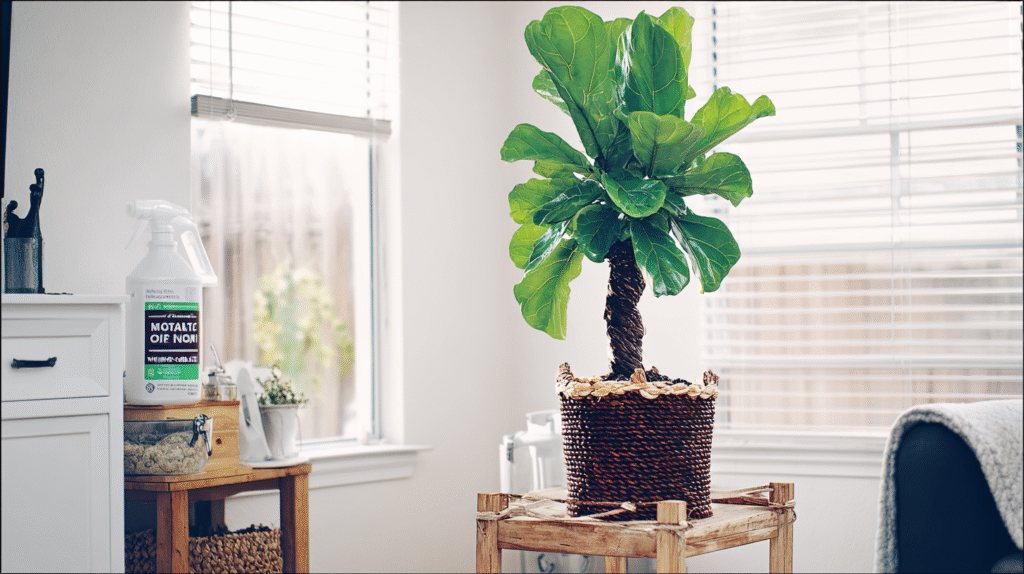
Signs Your Fiddle Needs Food (Or Has Had Too Much)
Hungry fiddle symptoms:
- Pale or yellowing lower leaves
- No new growth for months
- Small new leaves
- Slow growth despite good light
Overfed fiddle symptoms:
- Brown spots on leaves
- White crust on soil
- Leaf drop
- Brown leaf edges
When I see hunger signs, I don’t panic-fertilize. I start with 1/4 strength and watch for improvement.
My Foolproof Fertilizing Method
- Water first: Always fertilize damp soil to prevent root burn
- Dilute properly: I use a measuring cup now (learned this the hard way)
- Apply evenly: Pour slowly around the pot, not just one spot
- Flush monthly: Every 4th watering, use plain water to prevent salt buildup
Game-changer tip: I keep a dedicated watering can just for fertilizer. No more guessing if I already fed it.
Natural Alternatives That Surprised Me
Coffee grounds: Mixed into top soil monthly = slight nitrogen boost Banana peel water: Soak peels for 48 hours, dilute 1:5 = potassium boost Aquarium water: If you have fish, this is liquid gold Worm casting tea: My secret weapon for stressed plants
Warning: These aren’t replacements for balanced fertilizer, just supplements.
The Mistakes That Almost Killed My Fiddle
Mistake #1: Fertilizing a new plant immediately
- Fix: Wait 2 months after bringing it home
Mistake #2: Doubling up when I missed a feeding
- Fix: Skip it and resume normal schedule
Mistake #3: Fertilizing a stressed plant
- Fix: Fix the problem first, then feed
Mistake #4: Using outdoor plant food
- Fix: Indoor plant formulas only
Seasonal Adjustments Nobody Mentions
Spring surprise: Your fiddle might drop leaves before new growth. Don’t panic and over-fertilize.
Summer thirst: More growth = more water needed. Adjust accordingly.
Fall slowdown: Reduce fertilizer before your fiddle does it for you with yellow leaves.
Winter dormancy: Seriously, stop fertilizing. I learned this when I killed my first fiddle.
Quick Troubleshooting Guide
My fiddle isn’t growing despite fertilizing
Check your light first. No amount of food fixes bad lighting.
How do I fix fertilizer burn?
Flush soil with 2x the pot volume of water. Wait a month before feeding again.
Can I use orchid fertilizer?
Yes, but dilute it more. Orchid food is concentrated.
Should I fertilize a sick plant?
Never. Fix the issue first. Fertilizer isn’t medicine.
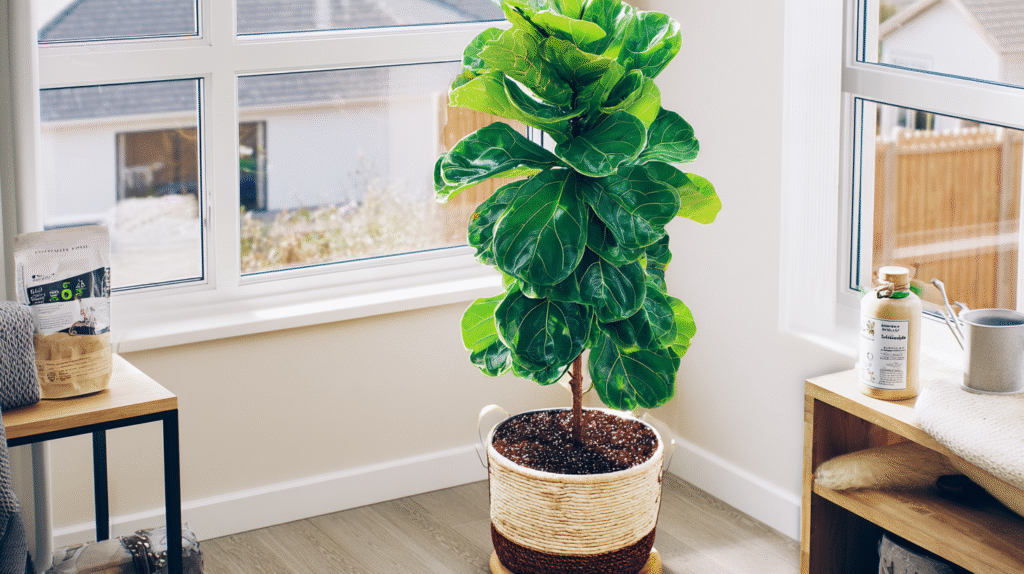
My Current Routine (That Grew 18 Inches in One Summer)
- Fiddle Leaf Fig Plant Food every 2 weeks in summer
- Diluted to 1/2 teaspoon per cup of water
- Applied after regular watering
- Monthly soil flush with plain water
- Worm casting top dress in spring
- Zero fertilizer December through February
The Bottom Line on Fiddle Leaf Fig Fertilizer
After killing one fiddle and stunting another, here’s what I know for sure:
- Consistent, diluted feeding beats sporadic full-strength doses
- Less is more – you can always add, but can’t undo burn
- Seasonal adjustments matter more than the perfect formula
- Your fiddle will tell you what it needs – just listen
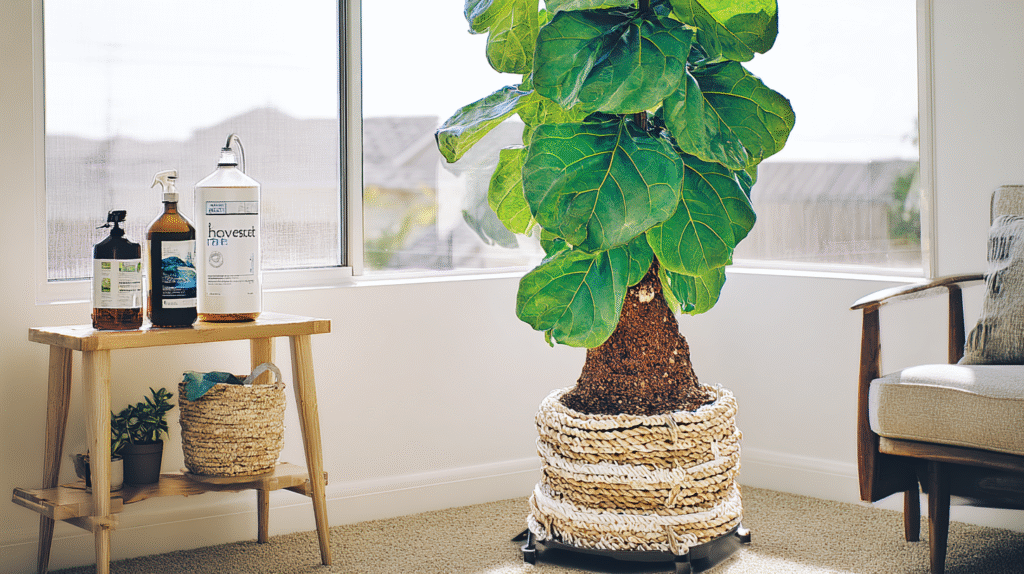
My once-stubborn fiddle now touches my ceiling. Same light, same pot, same location. The only difference? Understanding how to feed it properly.
Start with quarter-strength fertilizer. Watch your plant. Adjust as needed. And remember – the best fertilizer won’t fix bad light or overwatering. Get those basics right first, then let fertilizer work its magic.
Ready to see your fiddle leaf fig actually grow? Pick one fertilizer, start diluted, and stay consistent. Your future giant fiddle will thank you. 🌿