My Venus flytrap’s name is Audrey III, and she’s killed more of my expectations than actual flies. Bought her thinking I’d have this badass plant snapping up bugs left and right, maybe solving my fruit fly problem. Reality? She caught one fly in three months, then went on hunger strike.
The care tag said “water regularly and it will feed itself.” Yeah, that tag was written by someone who’s never owned a Venus flytrap indoors in winter when there are exactly zero bugs and your plant is slowly starving while you panic-Google “do Venus flytraps need food.”
Four dead flytraps later (RIP Audrey I, Audrey II, and that unnamed one from Home Depot), I finally figured out these drama queens have very specific requirements that nobody explains properly. Now Audrey III is on her second year, has 15 active traps, and actually catches things. Here’s what actually works for feeding and watering these ridiculous plants.
The Water Situation That Kills Most Flytraps
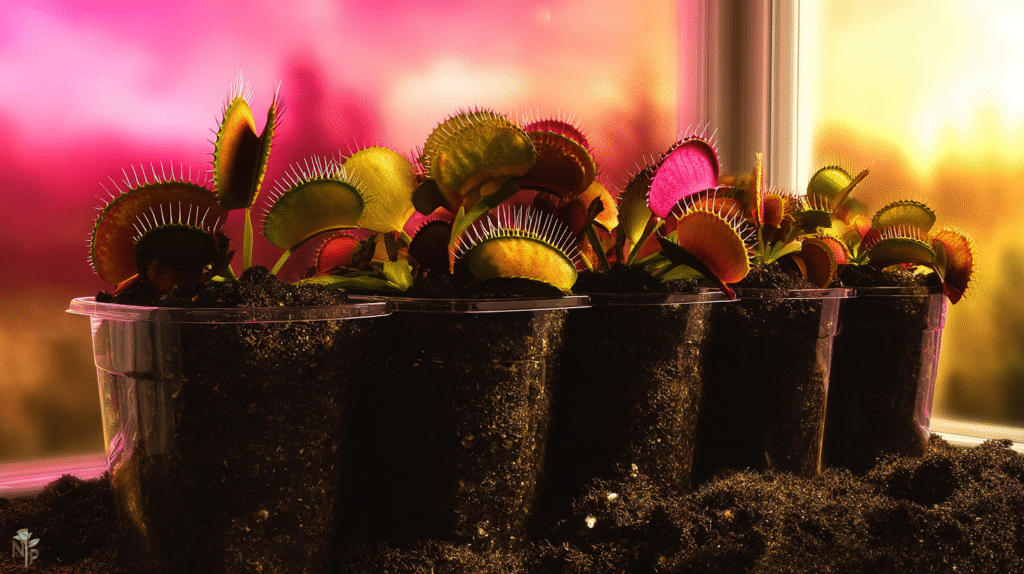
Tap water is basically poison to Venus flytraps. I killed Audrey I in two weeks with tap water. Our tap has like 300 ppm dissolved minerals. Venus flytraps want 50 ppm max, ideally zero.
What actually works:
Distilled water from the grocery store. Costs me $3 a week for one plant, but she’s alive, so whatever. Reverse osmosis water also works if you’re fancy. Rainwater is perfect if you live somewhere it actually rains (I’m in Vegas, so that’s twice a year if we’re lucky).
The tray method nobody explains properly:
Don’t water from the top like a normal plant. Put the pot in a tray with 1-2 inches of distilled water at all times. Never let it dry out. NEVER. I forgot once for two days in summer – half the traps turned black.
But here’s the weird part – in winter, reduce to just 1/2 inch of water. Too much water when they’re dormant causes root rot. Learned this when Audrey II turned to mush in January.
The mineral buildup nightmare:
Even with distilled water, minerals from dead bugs and soil accumulate. Every few months, I flush the pot with fresh distilled water – like, pour a whole gallon through it. The first time I did this, the runoff was brown. Gross but necessary.
Feeding: The Part Where You Feel Like a Weird Bug Assassin
Venus flytraps can photosynthesize, but they need bugs for nutrients. No bugs = slow growth and small traps. But feeding them wrong kills them faster than not feeding at all.
What triggers traps:
The trap has tiny trigger hairs inside. Bug has to touch two different hairs within 20 seconds, or touch one hair twice. This prevents them from closing on raindrops or debris. Smart but annoying when you’re trying to feed them.
I spent 20 minutes trying to feed Audrey III a dead fly, poking it around trying to trigger the trap. Looked insane. Worked eventually.
What to feed (learned the hard way):
- Live flies or spiders: Best option, trap stays closed 5-10 days
- Dead bugs: Works but you have to massage the trap (more on this insanity later)
- Freeze-dried bloodworms: Rehydrate first, works great
- Fish food pellets: One tiny pellet, rehydrated
- Raw hamburger: NO. Tried this. Trap died. Rotted. Smelled awful.
What NOT to feed:
- Anything bigger than 1/3 the trap size (trap can’t close, dies)
- Ants (formic acid kills traps)
- Beetles with hard shells (trap can’t digest, dies)
- Human food (cheese, bread, whatever – all kill traps)
- Fertilizer pellets (someone online suggested this, killed entire plant)
The Massage Technique That Makes You Question Your Life
When feeding dead bugs, the trap closes but doesn’t seal. It needs movement to trigger digestion. So you have to… massage the trap.
I use tweezers to gently squeeze the closed trap for 30 seconds, simulating a bug struggling. First time I did this, my roommate walked in. “Are you… petting your plant?” Yes. Yes I was. It works though – trap seals and stays closed for a week.
Without the massage, trap opens in 24 hours, bug falls out, trap often dies from the wasted energy. Learned this after killing several traps with improper dead bug feeding.
Feeding Schedule That Actually Works
Growing season (April-September):
Feed 2-3 traps once a month. Not every trap, not every week. Overfeeding is worse than underfeeding. Each trap can only catch 3-4 bugs in its lifetime before dying, so don’t waste them on crappy food.
Winter dormancy (October-March):
Don’t feed at all. They’re sleeping. Feeding during dormancy can break dormancy early and kill the plant. Audrey II died this way.
Indoor plants that can’t catch their own food:
One bug per month, alternating which traps get fed. Mark fed traps with twist ties so you remember which ones are digesting. Sounds excessive but I’ve accidentally fed the same trap twice and killed it.
The Dormancy Drama Nobody Warns You About
Venus flytraps NEED winter dormancy. Not “oh it would be nice,” but “will literally die without it.” The care tag didn’t mention this. Audrey I died after one year because I kept her at room temperature year-round.
Dormancy requirements:
- 3-4 months of cold (35-50°F)
- Reduced light
- Less water (keep moist, not soaked)
- No feeding
I put Audrey III in the garage near a window from November through February. She looks dead – black traps, no growth. First time I thought I’d killed her. Nope, just sleeping. Come March, new traps everywhere.
Tried the refrigerator method once (yes, keeping a plant in the fridge). Worked but sketched out guests. “Why is there a plant next to the milk?” Hard to explain.
Signs You’re Screwing Up
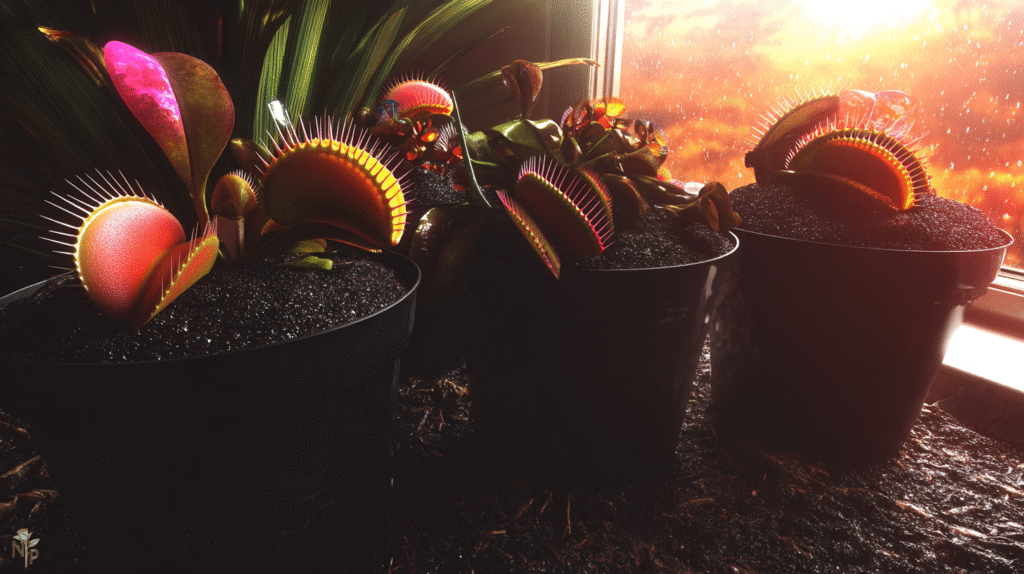
Black traps: Some black traps are normal – they only live 3-4 months. All black traps means problems. Usually tap water, overfeeding, or heat stress.
Traps won’t close: Either exhausted (each trap only closes 3-4 times) or plant is dying. Stop feeding, check water quality, check for root rot.
Small/deformed new traps: Needs more light or nutrients. Move to brighter spot or feed more often.
Traps closing without food: You’re triggering them by accident. Each closure without food wastes energy. Stop touching them. I know it’s tempting. Stop.
My Current Setup That Works
Container:
4-inch plastic pot with drainage holes sitting in a 6-inch ceramic dish (no drainage). Creates the water tray setup while looking less ghetto than the plastic takeout container I used before.
Location:
Summer: Outside on porch in full sun. Catches own food, grows like crazy. Winter: Garage for dormancy or sunny windowsill if keeping active.
Soil:
50/50 peat moss and perlite. Never potting soil with fertilizer – will kill them immediately. Learned this with the unnamed Home Depot victim.
Water routine:
Check tray daily in summer (evaporates fast), every 3 days in winter. Always distilled water. I keep a gallon jug next to her because I will forget otherwise.
Feeding routine:
Summer outside: She feeds herself, catches plenty Winter inside: One freeze-dried bloodworm monthly, alternating traps Growing season inside: 2-3 small bugs monthly
The Trigger Hair Hack
Want to show off your flytrap to friends? Use a toothpick to trigger it. But here’s the technique: touch one trigger hair, wait 2 seconds, touch a different hair. Snap! Trap closes.
But don’t do this often. Each trap only works a few times. I killed multiple traps on Audrey I by constantly triggering them for entertainment. Now I only demonstrate once per trap lifetime, and only unfed traps.
Why These Demanding Plants Are Worth It
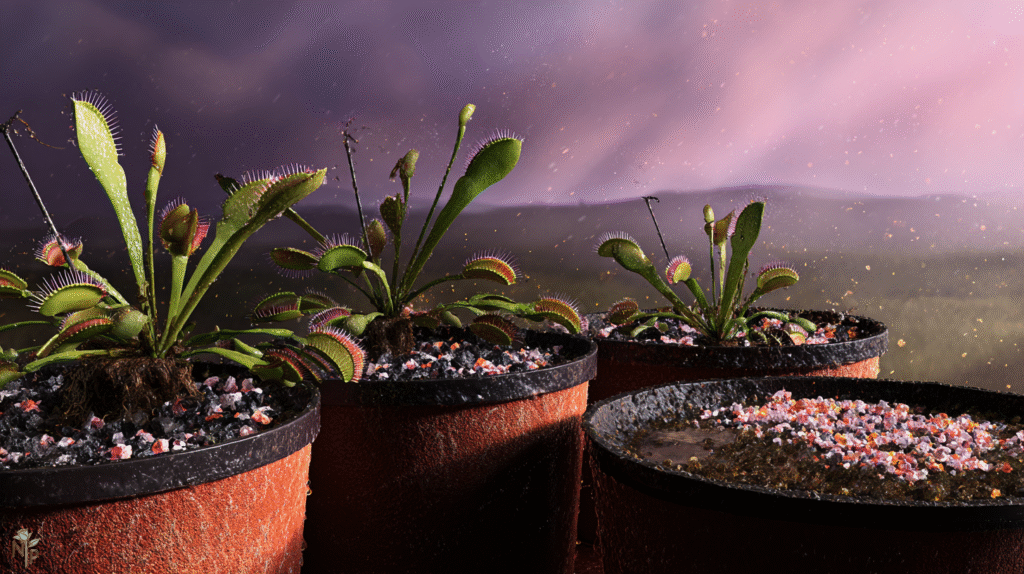
Watching a Venus flytrap catch its first fly is unreasonably satisfying. Last week, Audrey III caught a mosquito that had been annoying me for days. I actually cheered. The trap snapped shut in under a second – faster than I could swat it.
Plus, they’re genuinely alien-looking. The trap mechanism is insane – they build up water pressure then release it instantly. Scientists still don’t fully understand how they count trigger hair touches. It’s like having a sophisticated alien life form that happens to solve your gnat problem.
Real Talk
Venus flytraps aren’t beginner plants despite being sold everywhere. They need distilled water always, specific soil, winter dormancy, and careful feeding. Get any of these wrong and they die dramatically.
But nail these requirements and they’re actually pretty low maintenance. Five minutes weekly for water, five minutes monthly for feeding, ignore completely during dormancy. Way less work than my orchid that needs daily misting and weekly fertilizer.
Just remember: distilled water or death, feed sparingly or not at all, let them sleep in winter. Do that and you’ll have a bug-eating alien plant that makes everyone ask, “Wait, is that thing real?”
Yes. And it just ate a fly. You’re welcome.